Stem Types
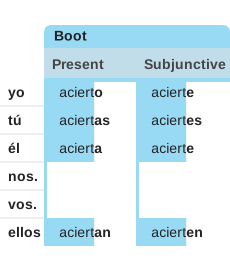
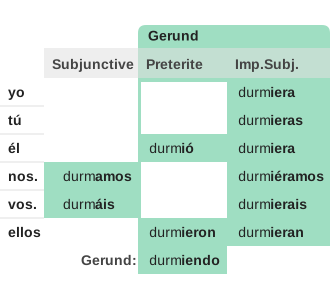
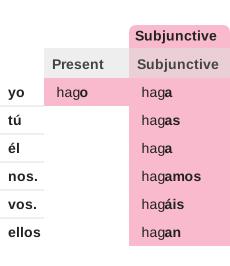
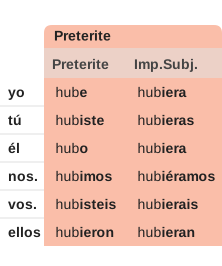
These are the conjugation cards for the seven irregular stem types. They show the tenses where these stems are used and the endings to use with each tense, except for Boot stems, which use the verb's regular endings. One example stem is plugged into each card.
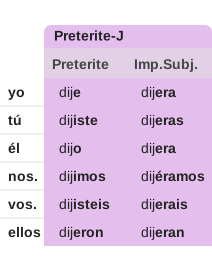
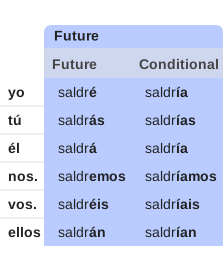
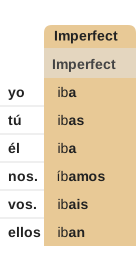
Conjugate the Stem
The endings from the conjugation cards are often similar to regular endings. But except for Boot stems, don't think about a verb's regular type when using irregular stems. Research suggests that fluent speakers don't mentally conjugate the verb as regular and then swap in an irregular stem. Rather, it's faster and more natural to "conjugate the stem" and directly associate the stem with its endings. For example, it's easy to remember that Subjunctive stems always use -o or -a- endings: conozco, salga, vengas, tengo, and so on.
Layers
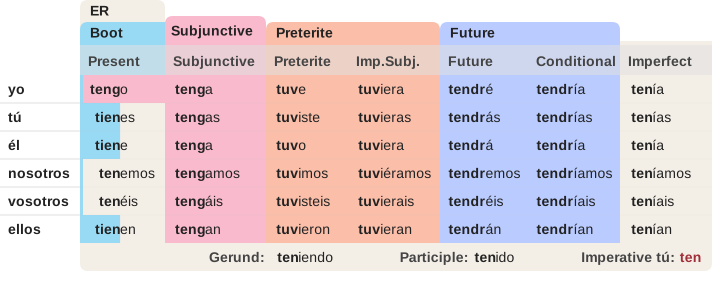
Conjugation tables are constructed in layers, starting with the regular-stem card on the bottom. In the few cases where irregular stem cards overlap each other, the Subjunctive, Preterite, and Preterite-J are the strong stems. Their conjugation cards always go on top of the other cards. For example, in the conjugation table for tener, Subjunctive sits on top of part of the Boot card, overriding it in the present subjunctive.
Seven irregular stem types at a glance
| Stem type | Used in | Example stem | Example forms |
|---|---|---|---|
| Boot | stressed present forms | pued· | puedo, puedes, pueda |
| Subjunctive | present yo and present subjunctive | pong· | pongo, ponga, pongas |
| Gerund | gerund, 3rd-person preterite, and imperfect subjunctive | durm· | durmiendo, durmió, durmiera |
| Preterite | preterite and imperfect subjunctive (-ieron/-iera endings) | pud· | pude, pudo, pudiera |
| Preterite-J | preterite and imperfect subjunctive (-eron/-era endings) | dij· | dije, dijo, dijera |
| Future | future and conditional | saldr· | saldré, saldría |
| Imperfect | imperfect | er·, ib·, ve· | era, iba, veía |